Walkaround Check Software
Walkaround checks that actually go somewhere
DVSA-aligned daily vehicle checks from the driver's phone. Under 3 minutes when everything's fine. A defect with an owner and a deadline when it isn't.
No paper sheets in cab door pockets. No box-ticking. Qinetic turns the morning walkaround into a record you can actually stand behind.
Rather talk it through? Request a callback
No credit card • Live before the kettle boils • No sensors or installs
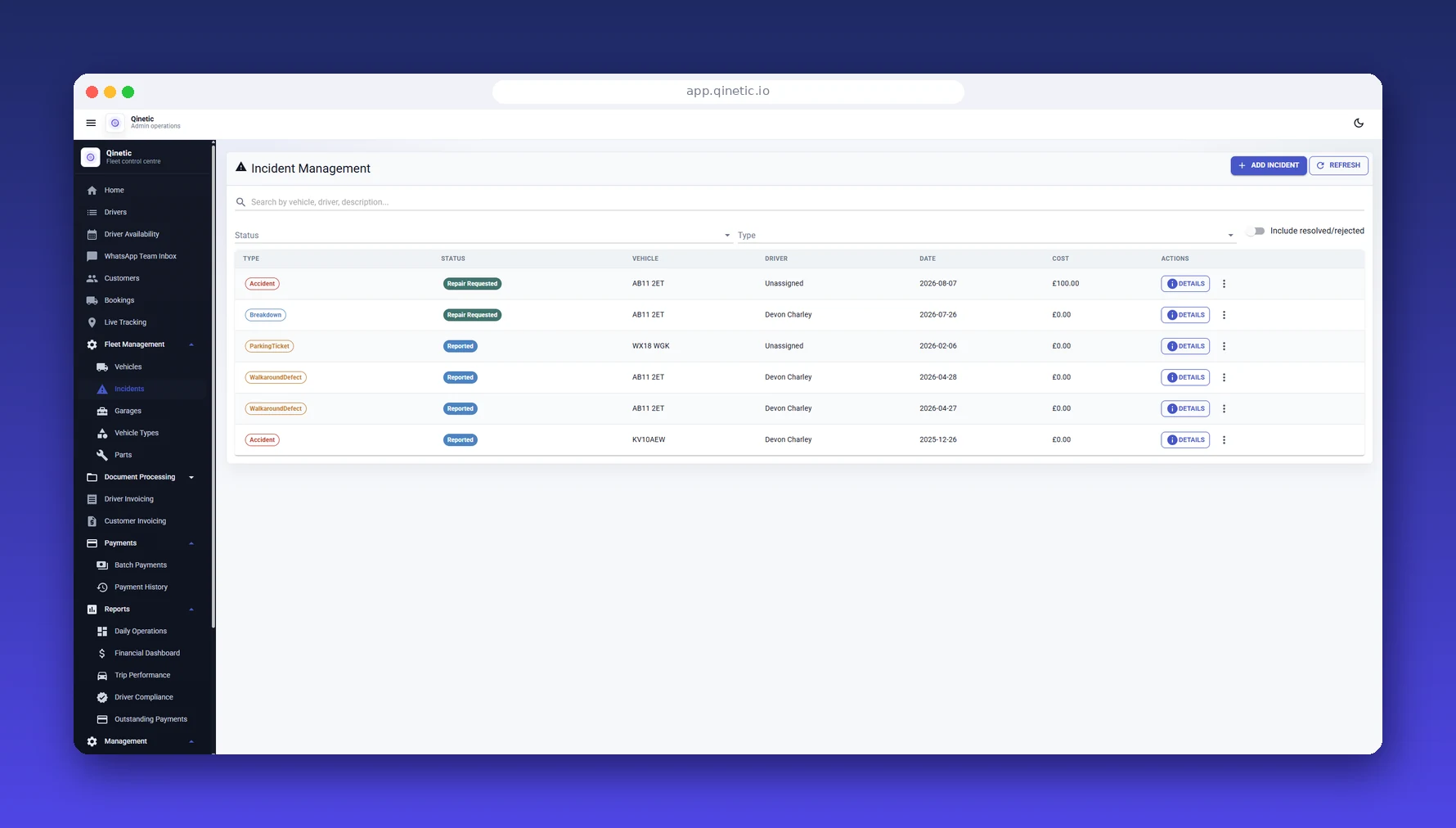
Incident to resolution
Keep accidents, breakdowns, defects, evidence, responsibility and follow-up together until the issue is closed.
The problem with paper check sheets
Every operator knows the drill. Drivers are supposed to check the vehicle before it goes out — tyres, lights, brakes, mirrors, load security. DVSA expects it. Your O-licence undertakings depend on it. And for most fleets, the evidence is a paper sheet filled in at 6am in the rain, shoved in a cab door pocket, and filed in a box nobody opens until an examiner asks.
Here's the uncomfortable part: a completed check sheet isn't the point. The point is what happens when a check finds something. A driver ticks "nearside brake light out" on paper — and then what? If the answer is "hopefully someone in the office notices", you don't have a compliance process. You have compliance theatre.
Qinetic, the fleet operations platform for UK courier, haulage and own-fleet operators, treats the walkaround check as the start of a workflow — not the end of one.
Tap, tap, done — when everything's fine
The check runs on the driver's phone. Mobile-first, big touch targets, built to be done standing next to the vehicle. A clean check takes under 3 minutes. A check that finds a problem takes a photo and 30 more seconds.
Under 3 minutes, on any phone
Walk the vehicle, tap through each item and submit in the Qinetic app. The supported web flow remains available when a browser is the better fit.
DVSA-aligned check items
Tyres, lights, mirrors, brakes, fluids, load security and the rest — matched to the vehicle type, because a 3.5t van check and an artic check aren't the same document.
Failed item → defect with an owner
A fail doesn't sit on a sheet. It becomes a defect record with an owner and a deadline, visible to the office before the vehicle leaves the yard.
Timestamped, per driver, per vehicle
Every check is tied to who did it, when, and on which vehicle. Missed or incomplete checks show up the same morning — not in a quarterly file review.
Feeds the vehicle's history
Checks, defects, repairs, MOT and service records sit on one vehicle timeline. Tuesday's failed brake check and Thursday's repair invoice, side by side.
Serious defects hold the vehicle
Safety-critical fails can take the vehicle off the road until resolved — with the full found → fixed → returned trail kept for audit.
Built to catch box-ticking
DVSA examiners know the pattern: a stack of perfect check sheets, every box ticked, filled in from the cab in 20 seconds. Ticked isn't checked. And when a pile of flawless paper meets a vehicle with an obvious defect, it's the operator who answers for it.
So Qinetic checks the check:
Too fast to be real
A walkaround done properly takes minutes, not seconds. Qinetic measures how long each check takes and flags the ones completed too quickly to have actually happened — so the office sees rushed checks, not just completed ones.
Random photo evidence
Qinetic randomly asks for photo evidence at different steps — a tyre today, the nearside lights tomorrow. Drivers can't predict which item needs a picture, so the only reliable way through the check is to actually do it.
Evidence that stands up
Photos, timestamps, durations, and driver identity are held against every check. When an examiner — or an insurer after an incident — asks how you know checks are done properly, you have an answer that isn't "we trust the sheets".
This isn't about policing drivers — most drivers do the check when the process doesn't fight them. It's about making the record honest, protecting the drivers who do it right, and catching the corner-cutting before DVSA does.
Why this matters for your O-licence
DVSA doesn't just expect checks to happen — it expects you to show that defects found were rectified before the vehicle was used, with records kept for at least 15 months. That's where paper systems fail. The sheet proves the driver looked; it rarely proves the operator acted.
Because Qinetic connects the check to the defect, the defect to the repair, and the repair to the vehicle's history, the evidence chain builds itself. When an examiner asks how you manage first-use checks and defect rectification, you're not digging through boxes — you're searching a record.
We won't tell you software guarantees compliance — nothing does. What Qinetic does is make the work visible, owned, and provable, which is what a public inquiry actually looks for.
What standalone check apps get wrong
There are plenty of walkaround check apps. Most produce a tidy PDF and stop there. The defect gets re-keyed into whatever you use for maintenance. The vehicle history lives somewhere else. The driver's compliance record lives somewhere else again.
Qinetic holds the walkaround check next to everything it touches: the vehicle's maintenance and MOT records, the driver's documents and compliance profile, incidents, and PCNs through FineWatch. One command centre, not ten tools.
And because drivers already use the Qinetic app for incidents, PCN photos and their self-bills, the walkaround isn't another system to learn. It's part of the app they already open. No sensors, no installs.
FAQs
Are walkaround checks a legal requirement in the UK?
For HGVs and PSVs, daily walkaround checks are a DVSA requirement and part of your operator licence undertakings. For vans, DVSA's Guide to Maintaining Roadworthiness sets the expectation of daily first-use checks — and after a collision, check records are one of the first things police and insurers ask for.
How long does a check take?
Under 3 minutes when the vehicle's fine — walk round, tap through, submit. Finding a defect adds a photo and a note. Compare that with a paper sheet that takes as long, then still has to be filed and read.
How do you stop drivers just ticking every box?
Two ways: checks completed too quickly to be real are flagged to the office, and Qinetic randomly requires photo evidence at different steps so drivers can't predict which item needs a picture. The honest route becomes the fast route.
Where do drivers complete checks?
The Qinetic app is available on iOS and Android and gives drivers checks, documents, incidents and invoices in one place. A supported browser-based check flow also remains available where the operator prefers to send a secure link.
What happens when a check finds a defect?
The failed item becomes a defect record with an owner and a deadline. The office is notified, the defect joins the vehicle's history, and serious items can hold the vehicle off the road until resolved — with the full found → fixed → returned trail kept for audit.
How does setup work?
We map your check templates, driver requirements and escalation process during a tailored demo. No vehicle hardware is required.
Stop filing check sheets. Start closing defects.
Checks from the driver's phone, defects with owners and deadlines, audit-ready records by default.
Book a Tailored Demo Start free trial